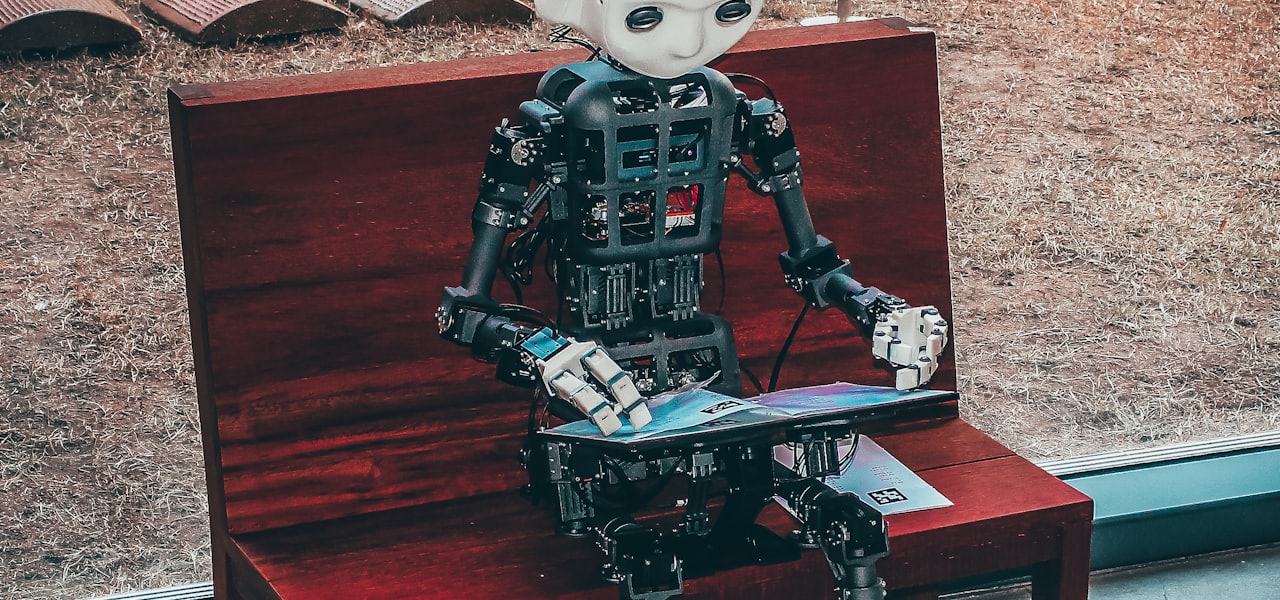
Embodied cognitive science is an interdisciplinary field of research, the aim of which is to explain the mechanisms underlying intelligent behavior. It comprises three main methodologies: the modeling of psychological and biological systems in a holistic manner that considers the mind and body as a single entity; the formation of a common set of general principles of intelligent behavior; and the experimental use of robotic agents in controlled environments. == Contributors == Embodied cognitive science borrows heavily from embodied philosophy and the related research fields of cognitive science, psychology, neuroscience and artificial intelligence. Contributors to the field include: From the perspective of neuroscience, Gerald Edelman of the Neurosciences Institute at La Jolla, Francisco Varela of CNRS in France, and J. A. Scott Kelso of Florida Atlantic University From the perspective of psychology, Lawrence Barsalou, Michael Turvey, Vittorio Guidano and Eleanor Rosch From the perspective of linguistics, Gilles Fauconnier, George Lakoff, Mark Johnson, Leonard Talmy and Mark Turner From the perspective of language acquisition, Eric Lenneberg and Philip Rubin at Haskins Laboratories From the perspective of anthropology, Edwin Hutchins, Bradd Shore, James Wertsch and Merlin Donald. From the perspective of autonomous agent design, early work is sometimes attributed to Rodney Brooks or Valentino Braitenberg From the perspective of artificial intelligence, Understanding Intelligence by Rolf Pfeifer and Christian Scheier or How the Body Shapes the Way We Think, by Rolf Pfeifer and Josh C. Bongard From the perspective of philosophy, Andy Clark, Dan Zahavi, Shaun Gallagher, and Evan Thompson In 1950, Alan Turing proposed that a machine may need a human-like body to think and speak: It can also be maintained that it is best to provide the machine with the best sense organs that money can buy, and then teach it to understand and speak English. That process could follow the normal teaching of a child. Things would be pointed out and named, etc. Again, I do not know what the right answer is, but I think both approaches should be tried. == Traditional cognitive theory == Embodied cognitive science is an alternative theory to cognition in which it minimizes appeals to computational theory of mind in favor of greater emphasis on how an organism's body determines how and what it thinks. Traditional cognitive theory is based mainly around symbol manipulation, in which certain inputs are fed into a processing unit that produces an output. These inputs follow certain rules of syntax, from which the processing unit finds semantic meaning. Thus, an appropriate output is produced. For example, a human's sensory organs are its input devices, and the stimuli obtained from the external environment are fed into the nervous system which serves as the processing unit. From here, the nervous system is able to read the sensory information because it follows a syntactic structure, thus an output is created. This output then creates bodily motions and brings forth behavior and cognition. Of particular note is that cognition is sealed away in the brain, meaning that mental cognition is cut off from the external world and is only possible by the input of sensory information. == The embodied cognitive approach == Embodied cognitive science differs from the traditionalist approach in that it denies the input-output system. This is chiefly due to the problems presented by the Homunculus argument, which concluded that semantic meaning could not be derived from symbols without some kind of inner interpretation. If some little man in a person's head interpreted incoming symbols, then who would interpret the little man's inputs? Because of the specter of an infinite regress, the traditionalist model began to seem less plausible. Thus, embodied cognitive science aims to avoid this problem by defining cognition in three ways. === Physical attributes of the body === The first aspect of embodied cognition examines the role of the physical body, particularly how its properties affect its ability to think. This part attempts to overcome the symbol manipulation component that is a feature of the traditionalist model. Depth perception, for instance, can be better explained under the embodied approach due to the sheer complexity of the action. Depth perception requires that the brain detect the disparate retinal images obtained by the distance of the two eyes. In addition, body and head cues complicate this further. When the head is turned in a given direction, objects in the foreground will appear to move against objects in the background. From this, it is said that some kind of visual processing is occurring without the need of any kind of symbol manipulation. This is because the objects appearing to move the foreground are simply appearing to move. This observation concludes then that depth can be perceived with no intermediate symbol manipulation necessary. A more poignant example exists through examining auditory perception. Generally speaking the greater the distance between the ears, the greater the possible auditory acuity. Also relevant is the amount of density in between the ears, for the strength of the frequency wave alters as it passes through a given medium. The brain's auditory system takes these factors into account as it process information, but again without any need for a symbolic manipulation system. This is because the distance between the ears for example does not need symbols to represent it. The distance itself creates the necessary opportunity for greater auditory acuity. The amount of density between the ears is similar, in that it is the actual amount itself that simply forms the opportunity for frequency alteration. Thus under consideration of the physical properties of the body, a symbolic system is unnecessary and an unhelpful metaphor. === The body's role in the cognitive process === The second aspect draws heavily from George Lakoff's and Mark Johnson's work on concepts. They argued that humans use metaphors whenever possible to better explain their external world. Humans also have a basic stock of concepts in which other concepts can be derived from. These basic concepts include spatial orientations such as up, down, front, and back. Humans can understand what these concepts mean because they can directly experience them from their own bodies. For example, because human movement revolves around standing erect and moving the body in an up-down motion, humans innately have these concepts of up and down. Lakoff and Johnson contend this is similar with other spatial orientations such as front and back too. As mentioned earlier, these basic stocks of spatial concepts are the basis in which other concepts are constructed. Happy and sad for instance are seen now as being up or down respectively. When someone says they are feeling down, what they are really saying is that they feel sad for example. Thus the point here is that true understanding of these concepts is contingent on whether one can have an understanding of the human body. So the argument goes that if one lacked a human body, they could not possibly know what up or down could mean, or how it could relate to emotional states. [I]magine a spherical being living outside of any gravitational field, with no knowledge or imagination of any other kind of experience. What could UP possibly mean to such a being? While this does not mean that such beings would be incapable of expressing emotions in other words, it does mean that they would express emotions differently from humans. Human concepts of happiness and sadness would be different because human would have different bodies. So then an organism's body directly affects how it can think, because it uses metaphors related to its body as the basis of concepts. === Interaction of local environment === A third component of the embodied approach looks at how agents use their immediate environment in cognitive processing. Meaning, the local environment is seen as an actual extension of the body's cognitive process. The example of a personal digital assistant (PDA) is used to better imagine this. Echoing functionalism (philosophy of mind), this point claims that mental states are individuated by their role in a much larger system. So under this premise, the information on a PDA is similar to the information stored in the brain. So then if one thinks information in the brain constitutes mental states, then it must follow that information in the PDA is a cognitive state too. Consider also the role of pen and paper in a complex multiplication problem. The pen and paper are so involved in the cognitive process of solving the problem that it seems ridiculous to say they are somehow different from the process, in very much the same way the PDA is used for information like the brain. Another example examines how humans control and manipulate their environment
Artificial intelligence content detection
Artificial intelligence detection software aims to determine whether some content (text, image, video, or audio) was generated using artificial intelligence (AI). This software is often unreliable. == Accuracy issues == Many AI detection tools have been shown to be unreliable in detecting AI-generated text. In a 2023 study conducted by Weber-Wulff et al., researchers evaluated 14 detection tools including Turnitin and GPTZero and found that "all scored below 80% of accuracy and only 5 over 70%." They also found that these tools tend to have a bias for classifying texts more as human than as AI, and that accuracy of these tools worsens upon paraphrasing. === False positives === In AI content detection, a false positive is when human-written work is incorrectly flagged as AI-written. Many AI detection platforms claim to have a minimal level of false positives, with Turnitin claiming a less than 1% false positive rate. However, later research by The Washington Post produced much higher rates of 50%, though they used a smaller sample size. False positives in an academic setting frequently lead to accusations of academic misconduct, which can have serious consequences for a student's academic record. Additionally, studies have shown evidence that many AI detection models are prone to give false positives to work written by people whose first language is not English, and also to neurodivergent people. In June 2023, Janelle Shane wrote that portions of her book You Look Like a Thing and I Love You were flagged as AI-generated. === False negatives === A false negative is a failure to identify documents with AI-written text. False negatives often happen as a result of a detection software's sensitivity level or because evasive techniques were used when generating the work to make it sound more human. False negatives are less of a concern academically, since they aren't likely to lead to accusations and ramifications. Notably, Turnitin stated they have a 15% false negative rate. == Text detection == For text, this is usually done to prevent alleged plagiarism, often by detecting repetition of words as telltale signs that a text was AI-generated (including hallucinations). Detection systems may also rely on stylistic and structural regularities associated with LLM output, such as unusually consistent grammar, formulaic transitions, repeated discourse markers, and recurring rhetorical templates. Some tools are designed less to establish authorship provenance than to flag prose that resembles common LLM-generated style patterns. They are often used by teachers marking their students, usually on an ad hoc basis. Following the release of ChatGPT and similar AI text generative software, many educational establishments have issued policies against the use of AI by students. AI text detection software is also used by those assessing job applicants, as well as online search engines, hiring, online moderation and publishing. Current detectors may sometimes be unreliable and have incorrectly marked work by humans as originating from AI while failing to detect AI-generated work in other instances. MIT Technology Review said that the technology "struggled to pick up ChatGPT-generated text that had been slightly rearranged by humans and obfuscated by a paraphrasing tool". AI text detection software has also been shown to discriminate against non-native speakers of English. Two students from the University of California, Davis, were referred to the university's Office of Student Success and Judicial Affairs (OSSJA) after their professors scanned their essays with positive results; the first with an AI detector called GPTZero, and the second with an AI detector integration in Turnitin. However, following media coverage, and a thorough investigation, the students were cleared of any wrongdoing. In April 2023, Cambridge University and other members of the Russell Group of universities in the United Kingdom opted out of Turnitin's AI text detection tool, after expressing concerns it was unreliable. The University of Texas at Austin opted out of the system six months later. In May 2023, a professor at Texas A&M University–Commerce used ChatGPT to detect whether his students' content was written by it, which ChatGPT said was the case. As such, he threatened to fail the class despite ChatGPT not being able to detect AI-generated writing. No students were prevented from graduating because of the issue, and all but one student (who admitted to using the software) were exonerated from accusations of having used ChatGPT in their content. In July 2023, a paper titled "GPT detectors are biased against non-native English writers" was released, reporting that GPTs discriminate against non-native English authors. The paper compared seven GPT detectors against essays from both non-native English speakers and essays from United States students. The essays from non-native English speakers had an average false positive rate of 61.3%. An article by Thomas Germain, published on Gizmodo in June 2024, reported job losses among freelance writers and journalists due to AI text detection software mistakenly classifying their work as AI-generated. In September 2024, Common Sense Media reported that generative AI detectors had a 20% false positive rate for Black students, compared to 10% of Latino students and 7% of White students. To improve the reliability of AI text detection, researchers have explored digital watermarking techniques. A 2023 paper titled "A Watermark for Large Language Models" presents a method to embed imperceptible watermarks into text generated by large language models (LLMs). This watermarking approach allows content to be flagged as AI-generated with a high level of accuracy, even when text is slightly paraphrased or modified. The technique is designed to be subtle and hard to detect for casual readers, thereby preserving readability, while providing a detectable signal for those employing specialized tools. However, while promising, watermarking faces challenges in remaining robust under adversarial transformations and ensuring compatibility across different LLMs. == Anti text detection == There is software available designed to bypass AI text detection. In practice, evasion may not require specialized bypass tools. Paraphrasing, style editing, and removal of repeated discourse markers can substantially reduce the effectiveness of detectors that rely on recognizable surface patterns. A study published in August 2023 analyzed 20 abstracts from papers published in the Eye Journal, which were then paraphrased using GPT-4.0. The AI-paraphrased abstracts were examined for plagiarism using QueText and for AI-generated content using Originality.AI. The texts were then re-processed through an adversarial software called Undetectable.ai in order to reduce the AI-detection scores. The study found that the AI detection tool, Originality.AI, identified text generated by GPT-4 with a mean accuracy of 91.3%. However, after reprocessing by Undetectable.ai, the detection accuracy of Originality.ai dropped to a mean accuracy of 27.8%. Some experts also believe that techniques like digital watermarking are ineffective because they can be removed or added to trigger false positives. "A Watermark for Large Language Models" paper by Kirchenbauer et al. (2023) also addresses potential vulnerabilities of watermarking techniques. The authors outline a range of adversarial tactics, including text insertion, deletion, and substitution attacks, that could be used to bypass watermark detection. These attacks vary in complexity, from simple paraphrasing to more sophisticated approaches involving tokenization and homoglyph alterations. The study highlights the challenge of maintaining watermark robustness against attackers who may employ automated paraphrasing tools or even specific language model replacements to alter text spans iteratively while retaining semantic similarity. Experimental results show that although such attacks can degrade watermark strength, they also come at the cost of text quality and increased computational resources. == Image, video, and audio detection == Several purported AI image detection software exist, to detect AI-generated images (for example, those originating from Midjourney or DALL-E). They are not completely reliable. Industry analyses have also noted that AI-driven image recognition systems often struggle in real-world environments, where inconsistent lighting, noise and variable visual inputs reduce detection reliability, a challenge highlighted in modern agricultural quality-control research. Others claim to identify video and audio deepfakes, but this technology is also not fully reliable yet either. Despite debate around the efficacy of watermarking, Google DeepMind is actively developing a detection software called SynthID, which works by inserting a digital watermark that is invisible to the human eye into the pixels of an image.
WorkingPoint
WorkingPoint is a web-based application that provides a suite of small business management tools. It is designed to serve as a single point of access for various business operations, featuring a user-friendly interface. WorkingPoint's functionalities include double-entry bookkeeping, contact management, inventory management, invoicing, and bill and expense management. == Company == WorkingPoint, formerly Netbooks Inc, is a privately held corporation based in San Francisco, CA. The company is backed by CMEA Capital, also based in San Francisco. WorkingPoint has about ten employees and is led by CEO Tate Holt and Chairman Tom Proulx. Proulx is a co-founder of Intuit and an original author of that company’s Quicken personal finance software. The company was founded in 2007 under its original name Netbooks by co-creator Ridgely Evers. Evers set out to design a product that was more user-friendly than Intuit’s Quickbooks, which he also co-created. In mid-2009 the company officially rebranded itself and its flagship product “WorkingPoint”. The purpose of the re-branding was to disassociate the company from the product category of small laptops also known as netbooks. == Social Media Presence == WorkingPoint maintains a daily blog geared toward small business owners and managers. Each week the blog is updated with 3 WorkingPoint product feature or “how-to” posts, 2 subscriber company profiles, and 2 small business coaching posts. The company also maintains a Twitter page and a Facebook page. == Product Description (Free Version) == WorkingPoint allows businesses to invoice up to five customers (repeatedly) and provides account access for up to two individual users free of charge. Online Invoicing WorkingPoint allows users to create customized quotes and invoices online. The invoices can be used to bill customers via email or hardcopy post. WorkingPoint compiles the info from these invoices so users can track customer payments, inventory costs, shipping charges, accounts receivable and sales taxes. Users can also manage customer overpayments, provide customer loyalty discounts, and view a customer invoice history. Bill & Expense Management Users can track their bills and expenses by entering info into the WorkingPoint interface. WorkingPoint compiles this info so users can track categorized expenses, accounts paid, accounts payable, and vendor purchase history. The interface also allows users to add to their inventory while entering billing info. Double-Entry Bookeeping WorkingPoint automatically records entries under the double-entry bookkeeping system (also known as debits and credits) when the user completes invoicing and expense forms. Users can view transactions in general ledger format and perform closing entries if necessary. This functionality is designed for users who do not have an accounting background. Business Contact Management WorkingPoint provides an interface for users to manage their customer and vendor contact info. The software automatically tracks the user’s relationship with contacts, so users can track a contact’s sales and purchase history. Contacts can be imported and exported via numerous email clients including Microsoft Outlook, Yahoo! Mail, Google Gmail, and Mac Address Book. Inventory Management The software automatically adjusts inventory quantities after every purchase and sale. Users can track their current inventory quantity, average cost of inventory on-hand, cost of goods sold (COGS) and top-selling products. Users can also make manual adjustments to inventory when necessary. Financial Reporting Users can view a balance sheet, income statement, or cash flow statement pertaining to their business. The software automatically manages accruals to produce the balance sheet and income statement. Users can choose a data range from which to draw any of these reports. Financial reports can be converted to pdf format or exported (with formulas intact) to OpenOffice or Microsoft Excel. Cash Management WorkingPoint enables users to monitor cash balances on their bank accounts. The software automatically tracks cash inflows and outflows when users manage their accounts payable and accounts receivable. Business Dashboard The Business Dashboard visually and graphically displays key real-time business data. Users can customize the Dashboard to display data of their choosing. Online Company Profile Users can create an online company profile in order to have a presence on the Internet and as a basis for participation in WorkingPoint’s small business community features. Public profiles are featured in the WorkingPoint Company Directory and can be viewed externally using the URL format: https://businessname.workingpoint.com. == Product Description (Premium Version) == The premium version of WorkingPoint costs $10 per month. It includes all of the functionalities of the free version, allowing unlimited invoicing and account access. It also offers the following functions: 1099 Tax Reporting, invoice payment collection via PayPal, Email Marketing via VerticalResponse, and the Premium Reports & Accounting Package. 1099 Tax Reporting Users can identify qualifying companies and individuals for IRS Form 1099 or IRS Form 1096 reporting. WorkingPoint automatically tracks payments made to these companies and individuals. Users can then generate 1099 reports for distribution. Premium Reports & Accounting Package This includes: a Daily Operating Report providing users with sales and cash flow information, customizable accounts categorization, and cash flow statements using the indirect method of reporting. Invoice Payment Collection via PayPal Users can collect payment on their invoices via PayPal. Email Marketing via VerticalResponse The WorkingPoint premium package includes 500 email credits with the email marketing firm VerticalResponse.
Douglas Parkhill
Douglas F. Parkhill is a Canadian technologist and former research minister, best known for his pioneering work on what is now called cloud computing, and his work on Canada's Telidon videotex project. He started working at the Canadian ministry of Communications (now part of the Department of Trade and Industry) in 1969, having previously worked at the Mitre Corporation. He was responsible for many activities in communications satellites, computer communications, command and control systems and telecommunications. He was winner of the Treasury Board of Canada Secretariat's Outstanding Achievement award in 1982, the Conestoga shield for services to government and industry in computer communications research and development, the Touche Ross award for Telidon development. He was an author of several publications including the 1966 book, The Challenge of the Computer Utility. In the book, Parkhill thoroughly explored many of the modern-day characteristics of cloud computing (elastic provisioning through a utility service) as well as the comparison to the electricity industry and the use of public, private, government and community forms. The book won the McKinsey Foundation award for distinguished contributions to management literature. He worked with Dave Godfrey, the Canadian writer and novelist on a later book Gutenberg two about the social and political meaning of computer technology. He was in charge of research at the Federal Department of Communications at the time when the department was funding development of the Telidon videotext system, was heavily involved in promoting the system, and had overall control of the program. In a radio broadcast in 1980, he outlined some of the potential of the system, from financial information, to theatre reservations, with the ability to pay and print out tickets from the system. He later documented the history of the Telidon project, and the history of videotext in general. == Publications == The Challenge of the Computer Utility, Addison-Wesley, 1966, ISBN 0-201-05720-4 edited with Dave Godfrey, Gutenberg Two: The New Electronics and Social Change, Press Porcepic, 1979, ISBN 0-88878-191-1 The Beginning of a Beginning. Ottawa; Department of Communications, 1987. A history of the Telidon project.
Sunrise Calendar
Sunrise is a discontinued electronic calendar application for mobile and desktop. The service was launched in 2013 by designers Pierre Valade and Jeremy Le Van. In October 2015, Microsoft announced that they had merged the Sunrise Calendar team into the larger Microsoft Outlook team where they will work closely with the Microsoft Outlook Mobile service. == History == The first iteration of Sunrise launched in 2012 and was a daily email digest of appointments, events and birthdays. Sunrise was launched initially as an iPhone application on February 19, 2013. In June 2013, Sunrise raised $2.2 million (~$2.91 million in 2024) in venture funding from Resolute.vc, NextView Ventures, Lerer Hippeau Ventures, SV Angel, and other angel investment firms like Loïc Le Meur, Dave Morin, Fabrice Grinda. In May 2014, Sunrise launched on Android as well as on the web via a web application. In July 2014, Sunrise announced it had raised $6 million (~$7.81 million in 2024) Series A from Balderton Capital. Bernard Liautaud joined the board. On February 11, 2015, Sunrise Atelier, Inc. was acquired by Microsoft for US$100 million (~$129 million in 2024). On October 28, 2015, Microsoft announced that Sunrise would be discontinued, and its functionality merged into Outlook Mobile. Microsoft later stated that the app would permanently cease functioning on August 31, 2016, but the shutdown was delayed to September 13, 2016, to coincide with an update to Outlook Mobile that incorporates aspects of Sunrise into its calendar interface. == Features == Sunrise allowed users to connect with Google Calendar, iCloud calendar and with Exchange Server. The following third-party services featured integration with Sunrise: Foursquare, GitHub, TripIt, Asana, Evernote, Google Tasks, Trello, Songkick, and Wunderlist. As a web app, users could sign-in and use Sunrise in a web browser, with no downloads required. A native Sunrise app could also be downloaded for OS X 10.9 and later, iOS 8.0 and later (both iPhone and iPad) as well as Android phones and tablets. In May 2015, Sunrise launched Meet, a keyboard for Android and iOS that lets users select available time slots in their calendar to schedule one-to-ones.
Glyph (data visualization)
In the context of data visualization, a glyph is any marker, such as an arrow or similar marking, used to specify part of a visualization. This is a representation to visualize data where the data set is presented as a collection of visual objects. These visual objects are collectively called a glyph. It helps visualizing data relation in data analysis, statistics, etc. by using any custom notation. In the context of data visualization, a glyph is the visual representation of a piece of data where the attributes of a graphical entity are dictated by one or more attributes of a data record. == Constructing glyphs == Glyph construction can be a complex process when there are many dimensions to be represented in the visualization. Maguire et al proposed a taxonomy based approach to glyph-design that uses a tree to guide the visual encodings used to representation various data items. Duffy et al created perhaps one of the most complex glyph representations with their representation of sperm movement.
Hildon
Hildon is an application framework originally developed for mobile devices (PDAs, mobile phones, etc.) running the Linux operating system as well as the Symbian operating system. The Symbian variant of Hildon was discontinued with the cancellation of Series 90. It was developed by Nokia for the Maemo operating system. It focuses on providing a finger-friendly interface. It is primarily a set of GTK extensions that provide mobile-device–oriented functionality, but also provides a desktop environment that includes a task navigator for opening and switching between programs, a control panel for user settings, and status bar, task bar and home applets. It is standard on the Maemo platform used by the Nokia Internet Tablets and the Nokia N900 smartphone. Hildon has also been selected as the framework for Ubuntu Mobile and Embedded Edition. Hildon was an early instance of a software platform for generic computing in a tablet device intended for internet consumption. But Nokia didn't commit to it as their only platform for their future mobile devices and the project competed against other in-house platforms. The strategic advantage of a modern platform was not exploited, being displaced by the Series 60, though its development is continued by the Maemo Leste project. == Components == The Hildon framework includes components that effectively provide a desktop environment. === Hildon Application Manager === Hildon Application Manager is the Hildon graphical package manager, it uses the Debian package management tools APT (Advanced Packaging Tool and dpkg) and provides a graphical interface for installing, updating and removing packages. It is a limited package manager, designed specifically for end-users, in that it doesn't directly offer the user access to system files and libraries. With the Diablo release of Maemo, Hildon Application Manager now supports "Seamless Software Update" (SSU), which implements a variety of features to allow system upgrades to be easily performed through it. === Hildon Control Panel === Hildon Control Panel is the user settings interface for Hildon. It provides simple access to control panels used to change system settings. === Hildon Desktop === Hildon Desktop is the primary UI component of Hildon, so makes up the bulk of what a user will see as "Hildon". It controls application launching and switching, general system control, and provides interfaces for task bar (application menu and task switcher), status bar (brightness and volume control), and home (internet radio and web search) applets. === Hildon Library === The Hildon library, originally developed by Nokia but since Maemo 5, developed by Igalia and Lanedo (who developed MaemoGTK+, the Maemo version of GTK+). It is a set of mobile specific GTK+ widgets for applications in Maemo. Up to Maemo 4, these widgets were designed for stylus usage. However, in Maemo 5, most widgets were deprecated and new widgets for direct finger manipulation were introduced, including a kinetic panning container.